This website uses cookies

Read our Privacy policy and Terms of use for more information.

LUNCH BREAK READS

Support Lunch Break Reads

If you look forward to these four reads every day, consider joining the Lunch Club. It keeps LBR going.

Join the Lunch Club →
01 • 17 Minute Read
DispatchEve Livingston
What Happens When Your Abuser Kills Himself?
In a communal garden in northern Scotland, Siri took a police call telling her that her ex-partner, the father of her children, had died by suicide. She had left him after years of control and violence, and his note blamed her. In northern England, Abby’s abusive ex died by suicide when their daughter was 16 weeks old, four weeks after she left him. Both felt relief and grief, but neither found the abuse had ended; to Siri, it simply changed form. Abuse charities, Britain’s National Health Service, and bereavement groups had no place for them, even though suicide threats are a well-known tool of coercive control. Siri and a violence-against-women specialist, Ellie Hutchinson, have since launched What Remains, a peer group and online resource for survivors. Abby, a year on, has only now reached the top of an NHS therapy waiting list.
Read the Story (e-mail required) →
02 • 13 Minute Read
ProPublicaKyle Hopkins
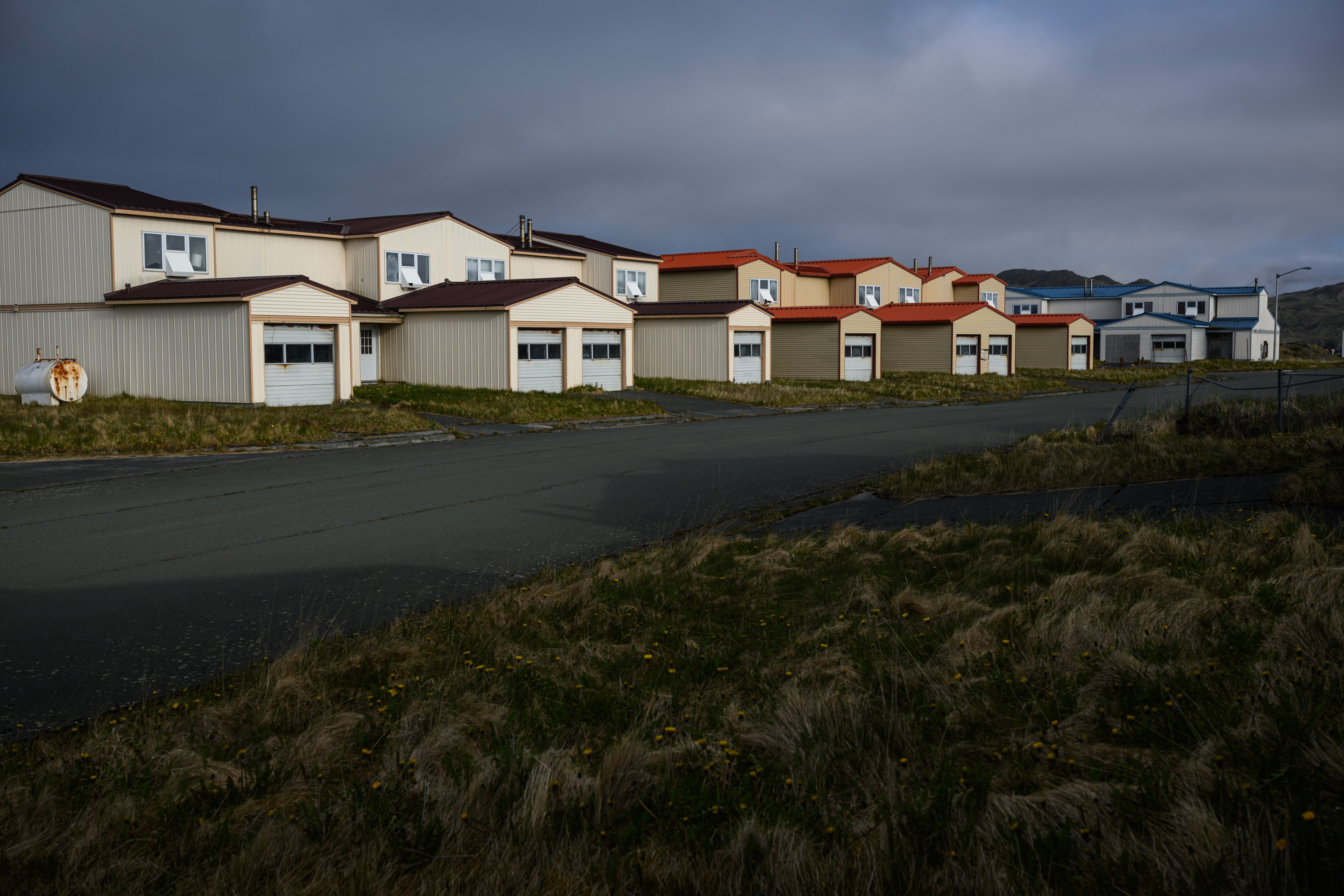
On This Nearly Deserted Alaska Island, You Pay to Keep Hundreds of Empty Buildings Wired for Internet
On Adak Island, 1,200 miles from Anchorage in Alaska’s Aleutian chain, a fiber-optic cable runs into an abandoned Navy house with broken windows. The island emptied after its base closed in 1997, yet a local telecom, Adak Eagle, began wiring its buildings years later. In 2016 the Federal Communications Commission agreed to subsidize lines to 346 locations, paid for by a fee on nearly every American’s phone bill. Today that costs more than $340,000 a year, or about $14,000 per resident by locals’ count of roughly two dozen. A door-to-door check of every listed building found most empty or wrecked, and no resident who used the service. Everyone, including Adak Eagle’s office, relies on Starlink satellite internet, which is far faster and cheaper.
Read the Story →
03 • 13 Minute Read
The 19thMariel Padilla
More members and money — and more fractures: The uncertain future of Erika Kirk’s Turning Point USA
The uncertain future of Erika Kirk’s Turning Point USA
At Butler University in Indiana, Mia Tedesco laid out “We are Charlie Kirk” bracelets at her new Turning Point USA table, only to find many in the trash. She is among the students who started chapters of the conservative youth group after its founder, Charlie Kirk, was assassinated in September 2025. Since then, high school chapters have grown 180 percent and college chapters 60 percent, and nonprofit revenue hit $115 million under his widow and successor, Erika Kirk. Her message of Christian faith and traditional gender roles has drawn thousands of young women. But some male chapter leaders distrust her, citing her praise for President Donald Trump’s war in Iran, which her husband had opposed. Many young conservatives feel betrayed by Trump, and at least one chapter has cut ties with the national group. Without the man some credit with holding the movement together, students are asking where conservatives go after Trump.
Read the Story →
04 • 25 Minute Read
LongreadsJames Whorton Jr.
Where the Forest Went
In July 1788, a surveyor named Hugh Maxwell set out to walk ruler-straight lines across 2.6 million acres of forest in what is now western New York, carving it into a grid speculators could sell. Novelist James Whorton Jr., whose suburban street sits on that grid, retraces Maxwell’s route. Maxwell, a devout war veteran, cataloged trees but barely noted the Seneca Nation towns he passed, and wrote home hoping the Senecas’ time there was short. Whorton finds the concrete marker that replaced Maxwell’s township tree in a battered woodlot beside a bike path. The forest isn’t gone, he argues, but it has changed, and by casting it as wilderness, Americans imagined themselves out of it. The Senecas, meanwhile, are still here, now fighting a data center beside their woods.
Read the Story →