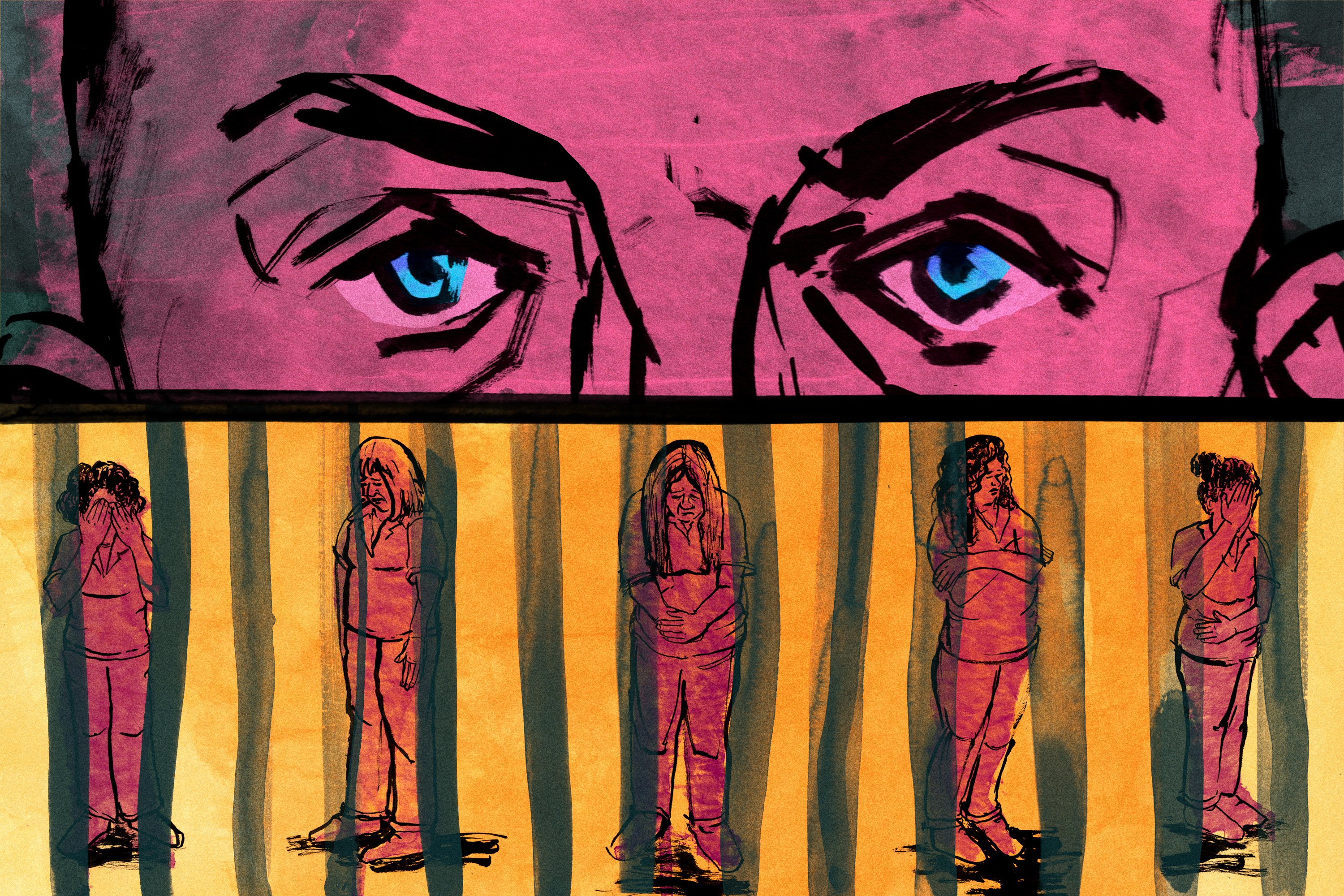
On Feb. 15, 2022, Brittany Maddox, about three months pregnant, was bleeding heavily when her husband Robert, a rookie police officer in Headland, Alabama, took her to the hospital along with what appeared to be fetal remains in a bag. Weeks later she reported that he had assaulted her before and after the hospital trip, and a fellow officer swore that Robert had admitted hitting and choking her. Robert, who denies the allegations, was charged with murder and then indicted for manslaughter. Four years later, the county’s district attorney said no expert could link the abuse to the miscarriage. The manslaughter charge was dropped, and Robert pleaded guilty to domestic violence and got probation. Brittany said the dropped charge hurt her more than the abuse. In the same county, more than 40 pregnant women have been arrested since 2009 after positive drug tests, and some went to prison even when their babies were born healthy.
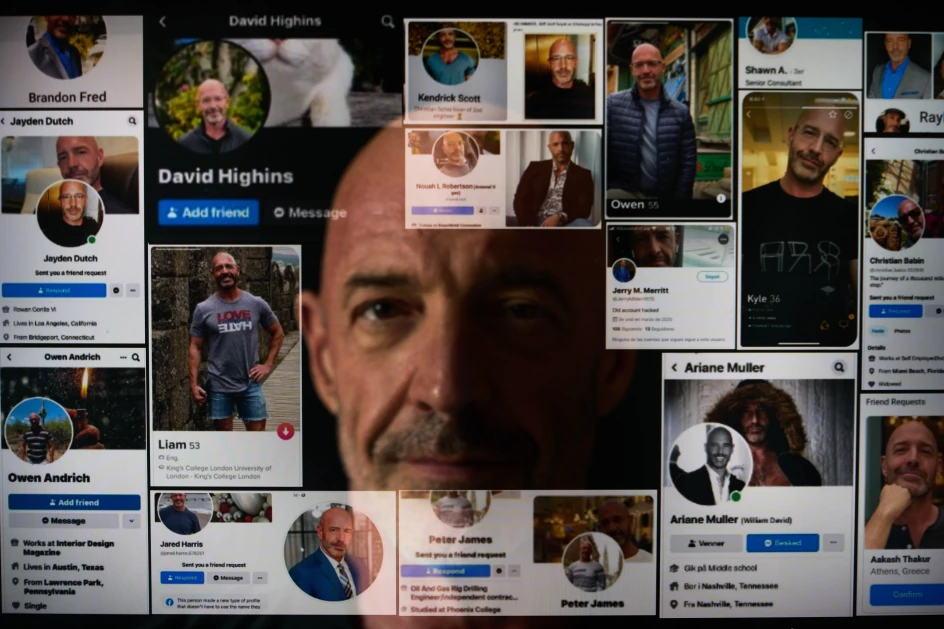
On a Palm Springs sidewalk, a stranger ran toward Hunter Bigham screaming that she had told her friend he wasn’t real. Her friend had fallen for an online suitor using photos of Bigham, a married furniture sales executive in Tupelo, Mississippi, whose pictures scammers have used since 2018 to build hundreds of fake profiles. Victims who have contacted him report about $1.4 million in combined losses, and some, convinced he is the con artist, have threatened him and his family. Bigham says Facebook rejected most of his takedown requests and the FBI told him it could do little. Meta says it is investigating his case. Leaving social media might slow the messages, but Bigham, a gay man who spent decades hiding who he was, says disappearing would feel like going back into the closet. He still checks his inbox each morning, bracing for the next victim.
Every night, 5-year-old Ryleigh Schecter of Twinsburg, Ohio, takes two experimental drugs and chases them with a Skittle. Seven months ago she was diagnosed with D.I.P.G., an inoperable brainstem tumor that strikes about 300 American children a year and typically kills within a year of diagnosis. Clinical trials are the only hope, but in August 2025 the National Cancer Institute ended its $4 million annual grant to the Pediatric Brain Tumor Consortium, a 27-year partnership of 16 children’s hospitals testing new treatments. Eight trials closed or paused, including two for D.I.P.G. The institute says the move was not about cost, citing slowing enrollment, and folded the work into a broader pediatric cancer network. The consortium’s former chair counters that the field had more good ideas than capacity to test them. The paused trials may reopen by early 2027, a delay longer than most children with D.I.P.G. live after diagnosis.
At the British Embassy in Tokyo, London Mayor Boris Johnson was promoting his city’s contactless payment technology when journalist Michael Fitzpatrick pointed out that Japan had pioneered it years earlier. That pattern, Fitzpatrick argues, defines modern Japan. It developed early electric vehicles, self-driving cars and AI research, but its lead faded, partly because of weak communication and a lack of marketing and a consensus-building process that slows decisions. The cost has been real, as Japan’s share of global nominal GDP fell from about 18% in 1995 to about 3.8% in 2025. Yet Fitzpatrick contends that critics urging Japan to become more like Silicon Valley overlook what its caution protected, including jobs and workers shielded from shareholder pressure. Societies, he argues, should choose which technologies to adopt and under what rules rather than adapting to every innovation, and Japan’s reluctance may have left it better placed to decide what technology is for.