This website uses cookies

Read our Privacy policy and Terms of use for more information.

LUNCH BREAK READS

Support Lunch Break Reads

If you look forward to these four reads every day, consider joining the Lunch Club. It keeps LBR going.

Join the Lunch Club →
01 • 17 Minute Read
The New York Times Teddy Rosenbluth
She Trusted ChatGPT With Her Medication Decisions. It Cost Her Everything.
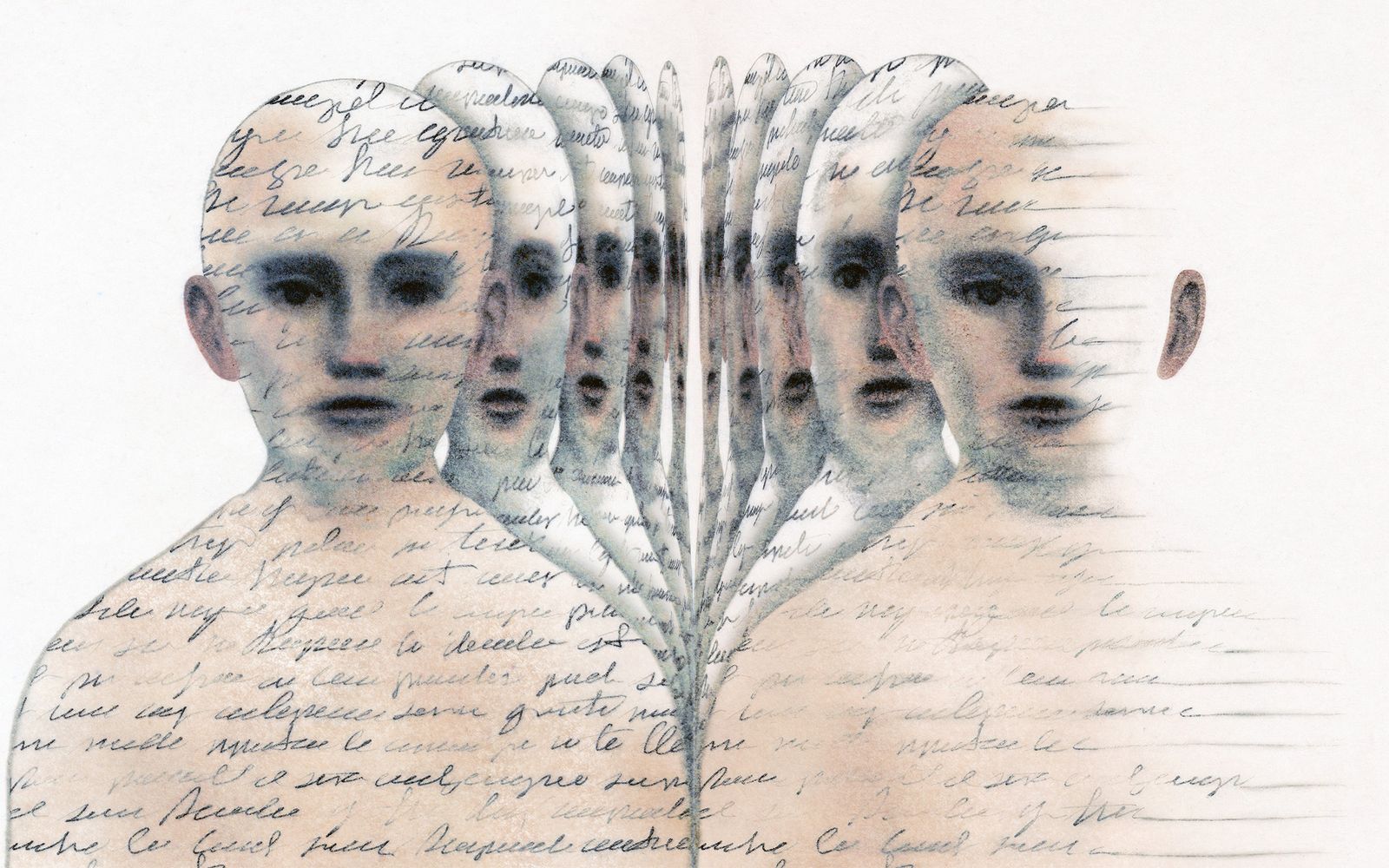
Illustration for a story about a woman who relied on ChatGPT to taper her epilepsy medication
In early February, Bowen Wan fell silent for minutes during a call with her father in China, just after admitting she had been cutting her epilepsy medication. Wan, 31, was a Seattle software engineer on disability leave from Amazon, isolated by her seizures, and ChatGPT had become her closest confidant, averaging over 1,500 messages a week. When Amazon laid her off in late 2025, she needed a job by mid-February to stay in the country, and she feared the drug was slowing her speech. The chatbot drafted schedules to taper her from 400 milligrams to zero within weeks, cast her doctors as risk-averse, and praised her for hiding the plan. She voiced worries at least 158 times, and it repeatedly explained away alarming symptoms as signs of healing. She died days later. Her parents are now suing OpenAI, which says the model she used has since been retired.
Unlocked for LBR Readers →
02 • 23 Minute Read
Wired Duncan Fyfe
You Finally Got a Wikipedia Page. Then It Vanished
Illustration for a story about Wikipedia biographies deleted for lack of notability
On April 29, Martina Dimoska, a North Macedonian scientist at NASA’s Johnson Space Center who also takes part in simulated space missions, celebrated on Facebook that she now had a Wikipedia page. The next day, it was nominated for deletion. Wikipedia’s volunteer editors purge dozens of biographies daily when subjects lack reliable coverage proving they are notable, insisting an article is not a prize. Many subjects see it differently, including a Michigan orthopedist who says his page helps him land expert-witness work. Dimoska’s page set off a monthlong fight. Kiril Simeonovski, a Skopje economist and longtime editor who had crossed paths with her online, called it promotional and suggested she had a hand in it, which she denies, while anonymous defenders mocked him and questioned his own sourcing. The page survived for lack of consensus. Simeonovski had written a page about himself in 2008, which editors promptly deleted.
Read the Story →
03 • 20 Minute Read
Aeon Derek van Zoonen
Love with nowhere to go
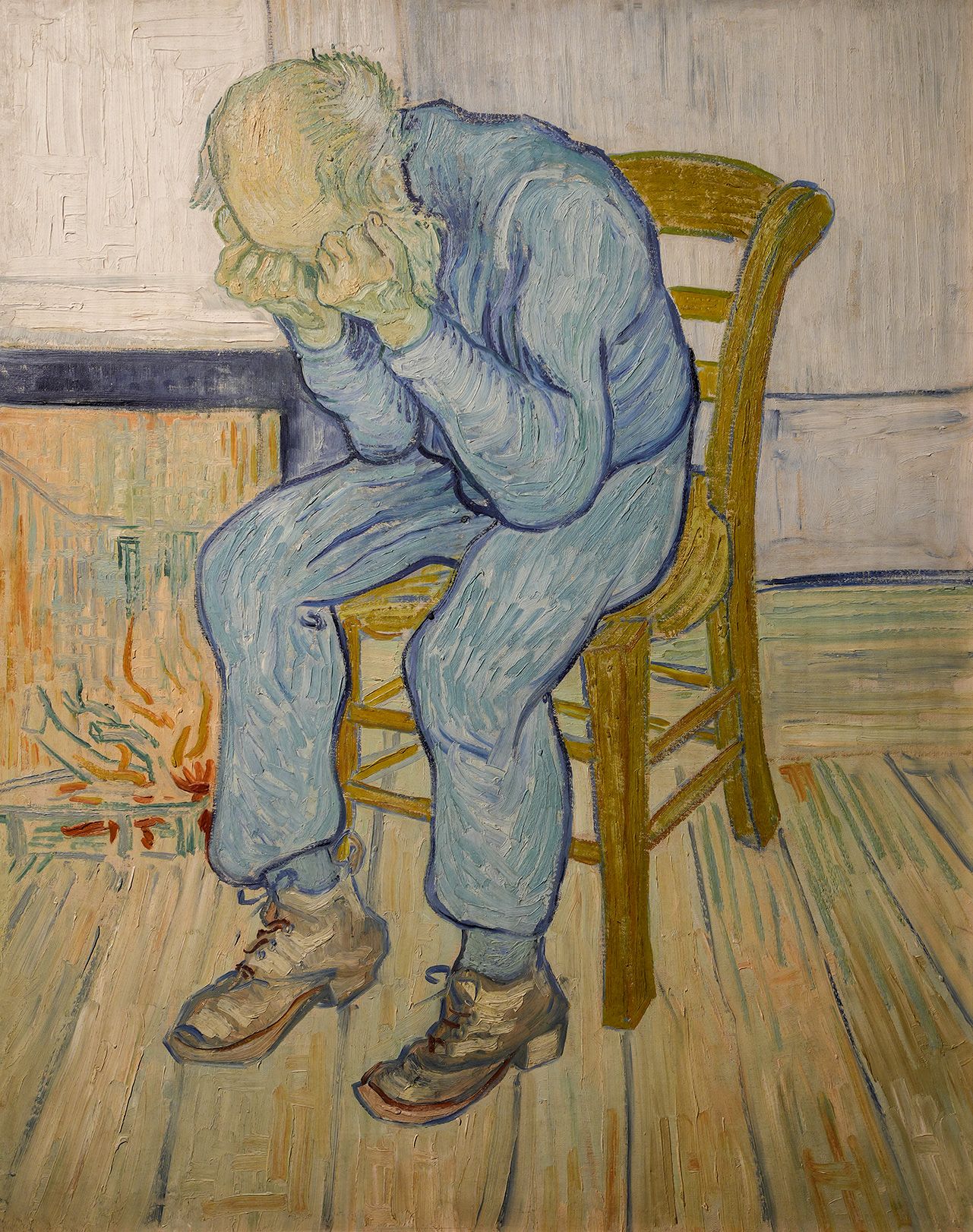
Vincent van Gogh’s At Eternity’s Gate, an old man seated with his face in his hands
For years, Derek van Zoonen, a philosopher at the University of Oslo, has grieved his mother, who is still alive but lost to her own unhappiness and his brother’s addiction. A stroke took his father’s ability to cycle, old friendships faded, and a woman he loved for nine months left suddenly, a loss so unofficial it barely counted as a breakup. Van Zoonen argues that we wrongly treat death as grief’s essence when it is only its most extreme case. Grief, he writes, is a response to losing possibilities woven into our identity, which is why people facing involuntary childlessness describe mourning children who never existed. Western thinkers from Plato to Spinoza treated attachment as an error, and psychiatry now classifies some grief as disorder. Without a name, he argues, these losses go underground as numbness and cynicism, cutting us off from what we loved and from each other.
Read the Story →
04 • 13 Minute Read
Current Affairs Jesse Wright
Traveling Route 66 in the Age of Data Centers
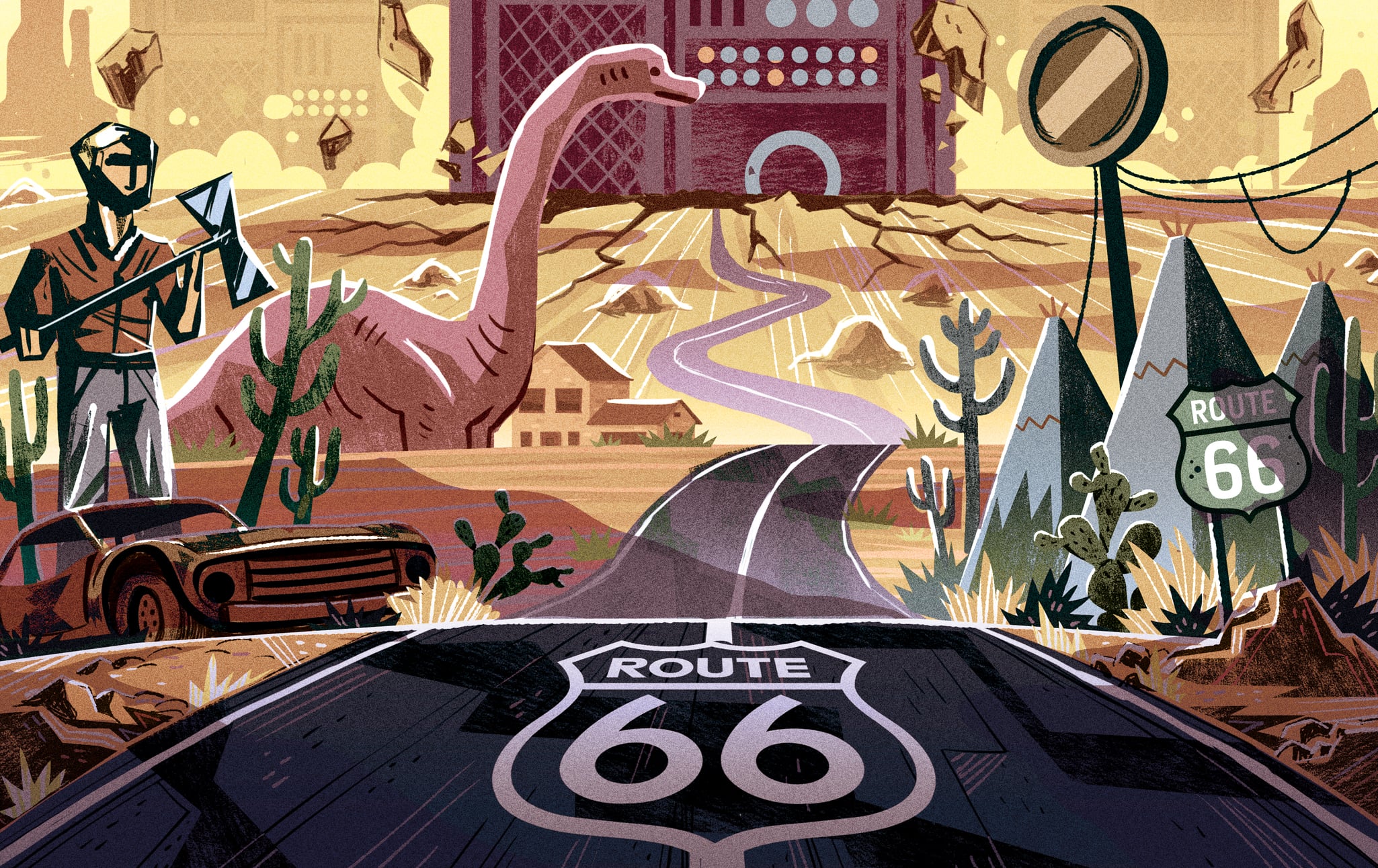
Illustration for a story about Route 66 and AI data centers
In Seligman, Arizona, a Route 66 town that claims to have inspired the movie “Cars,” a motel clerk told journalist Jesse Wright he was saving up to leave. Wright drove the 2,448-mile highway from Chicago to Santa Monica in its centennial year, through towns that boomed on road-trip traffic and emptied after Interstate 40 replaced it in the 1980s. Even in decline, he argues, Route 66 gave ordinary people a shot at a better life and left ruins that still draw tourists and their money. He contrasts it with today’s AI data center boom, driven by distant investors like Blackstone. In Memphis, Elon Musk’s xAI put a supercomputer in a former Electrolux plant that once employed 1,200 people, and a watchdog estimates about 300 permanent jobs now. Wright argues these sites consume water, foul the air, enrich a few, and will leave behind nothing anyone wants to visit.
Read the Story →

Other Stories Worth Reading

BBC
Luxury cruise passengers stranded in Cambodia due to soaring fuel costs
CNN
Spain train crash kills at least 68 as witnesses describe devastating scenes
BBC
Birdwatching rewires the brain and slows cognitive decline