This website uses cookies

Read our Privacy policy and Terms of use for more information.

Support Lunch Break Reads

If you look forward to these four reads every day, consider joining the Lunch Club. It keeps LBR going.

Join the Lunch Club →

LUNCH BREAK READS

01 • 22 Minute Read
The Guardian Max Daly
A tale of two trap houses: being cuckooed ruined my friend's life, but did it then help save him?
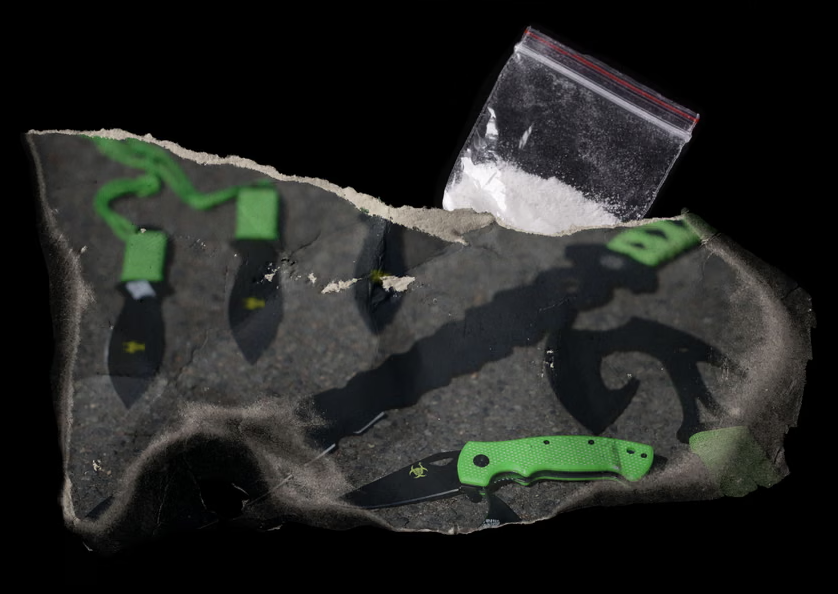
Two trap houses, cuckooing story illustration
Duncan got into heroin at 23 but stayed a devoted father and held down work as a painter and teaching assistant. By 2013 he had moved into a northeast London council flat that fell into decline, and by 2015 a teenage drug gang controlled the stairwells. After a 2016 breakup, a friend's death, and a job loss, Duncan let two homeless users stay with him, drawing him into the gang's orbit; within a year they were using his flat as a dealing base for free drugs, an arrangement that turned violent and pushed him into a homeless hostel in 2018. In 2021, once resettled, he let a second, more professional dealer, Tony, turn his home into a stash house. This time Duncan says a real friendship formed, one that helped steady his life even as Tony's crew put him at risk.
Read the Story →
02 • 35 Minute Read
ProPublica William Turton, Avi Asher-Schapiro, Molly Redden and Kirsten Berg
The FBI Anti-Corruption Squad Was Circling Susan Collins, Until Trump Got in the Way
Susan Collins FBI bribery investigation story image
In late 2019, a top fundraiser for Sen. Susan Collins met three executives from Navatek, a Hawaiian defense contractor, at a Corner Bakery in Washington to ask for a $500,000 donation, even though government contractors are barred from making political contributions. Navatek's CEO, Martin Kao, agreed to funnel $150,000 through a shell company, and two months later told his executives that Collins had committed to securing the company $32 million in naval contracts. After his 2020 arrest for fraud and campaign finance crimes, Kao told the FBI that this was one piece of a wider scheme in which he donated nearly $900,000 to politicians in exchange for tens of millions in federal funding, calling his company's government work essentially worthless. By late 2024, FBI agents believed they had enough evidence for a sweeping bribery investigation reaching senators in both parties, and had extensively questioned Kao about Collins specifically. Then Trump returned to office and gutted the FBI and Justice Department units handling public corruption cases, and the investigation was shelved before it could proceed.
Read the Story →
03 • 20 Minute Read
The New York Times M. Gessen
He Was The Times's Moscow Chief. My Grandmother Was His Censor.
M. Gessen Moscow censorship story image

I will read anything M. Gessen writes. Their stories about Russia and totalitarianism are thoughtful and nuanced, drawing from their own experience living there. If you haven't read any of their books, I don't think there is a bad one in the bunch.

Here they write about their grandmother who worked as a Soviet government censor in Moscow, one of the people whose job was to strike out or kill dispatches filed by foreign correspondents at the Central Telegraph office. From 1949 to 1954, one of the reporters she censored most was Harrison Salisbury, The New York Times's Moscow correspondent, whose copy she cut of specifics, analysis, and humor under strict rules against comparisons or mention of the censorship itself. She killed his story on the Soviet Union quietly reinstating the death penalty, and later his dispatches on the antisemitic "Doctors' Plot," which she recognized as accurate because she was living the same fear as a Jewish intellectual in Moscow. Salisbury spent years asking the Times to disclose that his reporting passed through censorship to no avail.

Unlocked for LBR Readers →
04 • 10 Minute Read
Psyche Håkon Evjemo
Maxxing treats life as a problem when it's a mystery
Maxxing and self-optimization essay illustration
In 2021, while working a corporate law job, Håkon Evjemo became obsessed with post-lunch napping after reading Matthew Walker's "Why We Sleep," which reframed an ordinary human limit as a fixable bug rather than an unavoidable feature of life. That reframing led Evjemo deeper into self-optimization, from atomic habits to cold exposure to cutting out gluten, until he recognized the same instinct online in "maxxing," the Gen Z trend of ruthlessly optimizing appearance, status, or finances, exemplified by looksmaxxing influencer Clavicular, whose followers pursue jaw surgery or unprescribed drugs to look more dominant. Evjemo argues the 20th-century philosopher Gabriel Marcel diagnosed this problem decades early, distinguishing "problems," which can be solved from a distance, from "mysteries," situations we're too implicated in to fix, and warning that treating all of life as the former hollows out experience even when the underlying self-help advice is genuinely useful.
Read the Story →

Other Stories Worth Reading

Futurism
“Slop Grenades”: Shopify CEO Who Pushed Staff to Use AI Is Now Horrified by What He’s Wrought
NPR
New book by Princess Diana's brother prompts war of words with King Charles III
NBC News
‘Looksmaxxing’ influencer Clavicular charged with rape in Massachusetts

Spread the Word

If someone you know would enjoy this, forward it their way.

Forward This Email →