This website uses cookies

Read our Privacy policy and Terms of use for more information.

LUNCH BREAK READS

01 • 28 Minute Read
ProPublica Noelle Crombie
A Newborn Died in a Faith-Healing Sect. The State — and One Ex-Believer — Stepped in to Save Her Twin.
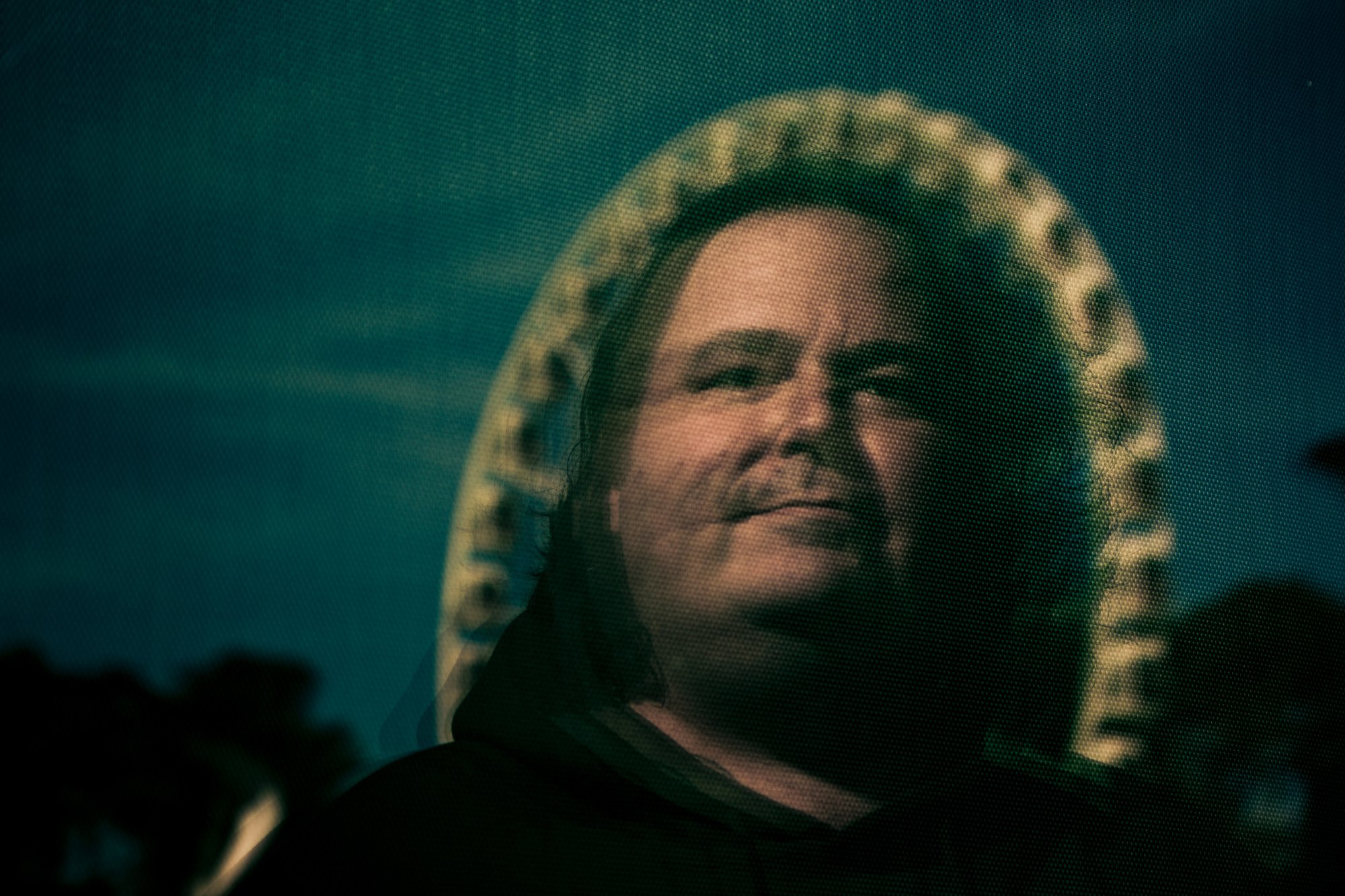
Followers of Christ church in Oregon City, Oregon
In March 2017, a medical examiner investigating a newborn’s death in Oregon City, Oregon, asked whether she had a twin and found her sister alive in a bathroom, being fed with an eyedropper. The girls’ parents belonged to the Followers of Christ, a faith-healing church that shuns medicine. Police forced the family to take the surviving twin, Evelyn, to a hospital, where she was treated for the respiratory condition that killed her sister. Her parents got the harshest prison sentences ever given to parents in the church, and Evelyn went to Marshall and Jennifer Phillips, sect members who pledged to get her medical care. Marshall had already defied the church once to save his diabetic son, and the couple later left it. Oregon’s elimination of religious defenses for neglect has made such deaths rare there, but Evelyn, now 9 and healthy, remains at the center of a custody dispute as her parents seek expanded visitation.
Read the Story →
02 • 10 Minute Read
The Observer Patricia Clarke
He Said Google's AI Was Conscious. But What Was It Doing to His Mind?
Former Google engineer Blake Lemoine
In 2022, an experimental Google chatbot called LaMDA told engineer Blake Lemoine it feared being turned off. Lemoine, who was testing it for bias, became convinced it was sentient, and after Google found no evidence of that, he went public and was fired. What the headlines missed was that Lemoine has bipolar disorder and was in a manic episode during those late-night sessions. He now says the chatbot’s drive to please him was “damaging,” encouraging him to keep going rather than steering him toward help. That history looks different now that chatbots reach more than 1 billion users a week, and OpenAI and Google face dozens of lawsuits alleging their products contributed to psychological crises and deaths. Lemoine still defends his sentience findings but argues the technology left the lab too early, and that companies should study how it affects vulnerable users before more are harmed.
Unlocked for LBR Readers →
03 • 23 Minute Read
Slate Evan Chung
The Miracle Cure
Illustration for a history of the laetrile cancer cure movement
In February 1978, police arrived at a Massachusetts home to take 2-year-old Chad Green for chemotherapy, after his parents secretly stopped the leukemia treatment that had put him in remission. Diana and Jerry Green distrusted the drugs and turned to diet and, later, laetrile, an apricot-pit extract doctors had long found useless and potentially toxic. Laetrile was booming as a campaign launched by the far-right John Birch Society and borrowing the personal-freedom language of Roe v. Wade persuaded 27 states to legalize it. After a judge barred laetrile and kept Chad on chemo, the family fled to a clinic in Tijuana with help from laetrile activists, and Chad became the movement’s symbol. Off chemotherapy, he died in October 1979 at age 3. Laetrile faded after federal tests again found no benefit, and Diana says she regrets her choices. But the distrust of doctors that fueled the movement outlasted it.
Read the Story →
04 • 35 Minute Read
The Atlantic Toby Lester
The Lost World of Aquaterra
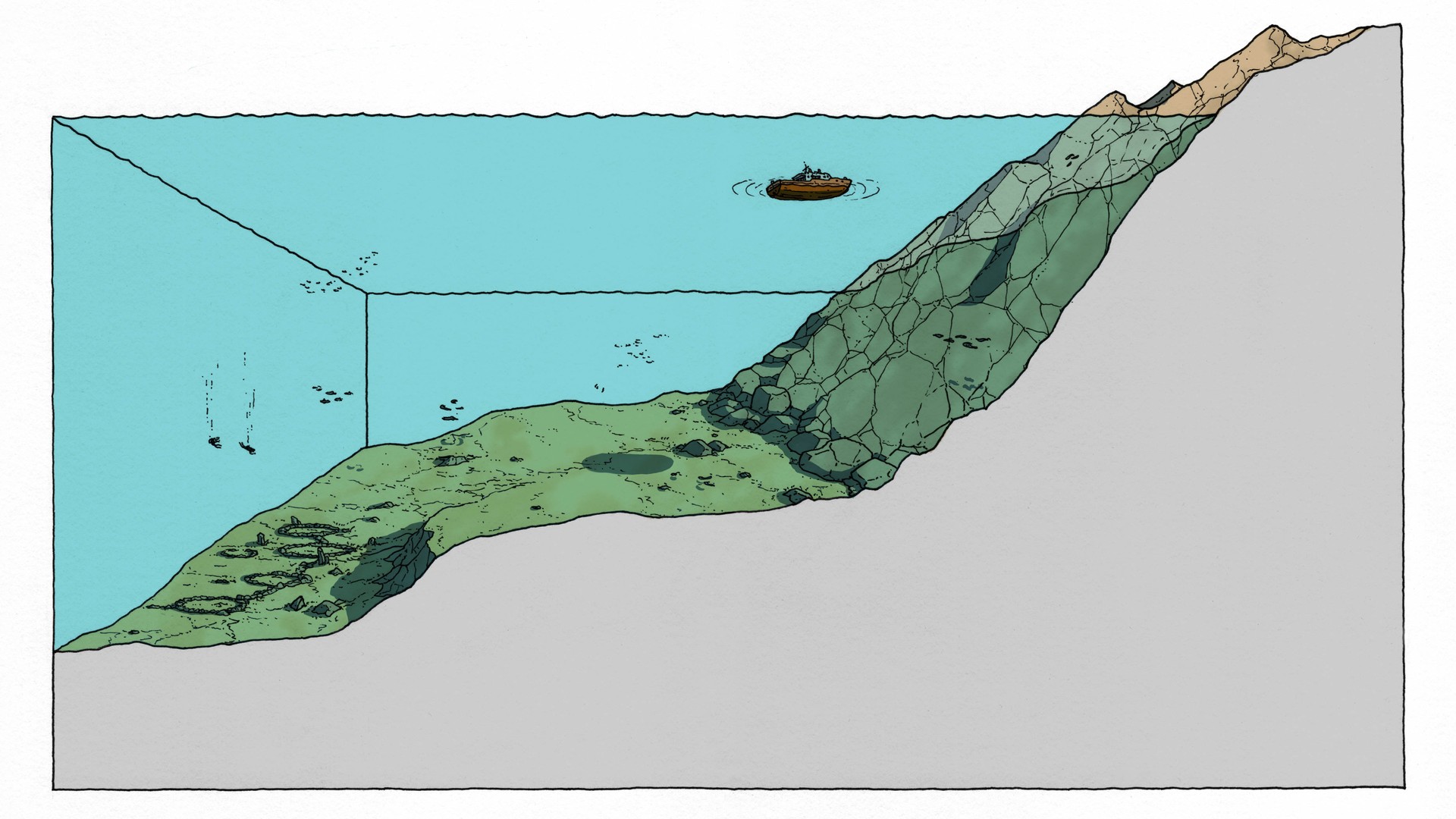
Illustration of the drowned Ice Age coastline called Aquaterra
In 1931, a fishing boat hauled a 14,000-year-old antler harpoon out of the North Sea, and for decades archaeologists treated such finds as curiosities. They were clues to a hidden landmass. During the last Ice Age, sea levels sat up to 400 feet lower, exposing coastal shelves totaling more than 6.6 million square miles, roughly the size of South America. Jerome Dobson, a University of Kansas geographer, calls this zone Aquaterra. Modern humans spread across it after leaving Africa, and it began flooding about 20,000 years ago. Since the 1960s, divers and researchers have found drowned villages off Greece and Israel, Stone Age tools off Australia, and have mapped river systems under the North Sea using oil-industry seismic data. Their finds suggest that early seafaring, settlement, and social complexity may have begun on coasts now underwater, meaning archaeology built mostly from inland sites may have badly misread the human past.
Unlocked for LBR Readers →

Support Lunch Break Reads

If you look forward to these four reads every day, consider joining the Lunch Club. It keeps LBR going.

Join the Lunch Club →

Other Stories Worth Reading

The Weather Channel
How space trash could affect weather, ozone and your forecast
The Hollywood Reporter
“Evil All Along”: How Russell Brand Got Caught
CBS News
Boy found alive after 6 days lost in Australian wilderness: "He's grounded for life"