This website uses cookies

Read our Privacy policy and Terms of use for more information.

LUNCH BREAK READS

01 • 65 Minute Read
The New Yorker Nick Berardini
Jontay Porter Had an N.B.A. Future. Then Gambling Addiction Took Over
On a Sunday in 2021, Jontay Porter, a former University of Missouri star whose knee injuries had derailed his N.B.A. career, lost $125,000 betting on football on FanDuel. He kept going, eventually wagering more than $50 million on the app, whose V.I.P. host sent him bonus cash and talked the company out of suspending his account by pointing to the wealth of his brother Michael, a Denver Nuggets star. Deep in debt to bookies, Porter returned to the league with the Toronto Raptors in 2024 and twice left games, faking an injury and an illness, so associates could bet against his stats. The bets were flagged, and he was banned and pleaded guilty to wire fraud. His case shows how sportsbooks profit from V.I.P. programs that court their heaviest losers, a sliver of users who generated nearly $600 million for FanDuel in one year. FanDuel says it has since added safeguards.
Read the Story →
02 • 15 Minute Read
The Washington Post Imogen Piper, Samuel Oakford and Zach Dorfman
A spy plane tied to covert attacks leads back to Florida’s largest senior community
This year, a modified Cessna business jet repeatedly flew near attacks on Ecuadorian fishing boats off the Galápagos Islands, strikes previously linked to a covert CIA program in which eight fishermen disappeared. Flight data and federal aviation records trace the plane to an unlikely first owner, Sunshine Aviation Capital, a company with no public profile whose filings were signed by members of the Morse family, the billionaire Republican donors who own The Villages, Florida’s sprawling retirement community. While the company owned it, the jet was managed and fitted with surveillance gear by a mechanic tied to Triangle Aviation Solutions, formerly Aero Contractors, a firm known for flying terrorism detainees for the CIA after 9/11. In 2023, Mark Morse, then The Villages’ CEO, signed off on transferring it to a trust that can shield ownership. Why the family was involved remains unclear, and neither it nor the CIA would comment.
Unlocked for LBR Readers →
03 • 10 Minute Read
The New York Times Matthew Purdy
The Boss, the Bribe and the Newspaper That Couldn’t Be Bought
On a winter night in 1871, a panicked horse fatally kicked James Watson, county auditor for Tammany Hall, the Democratic machine led by William “Boss” Tweed that controlled New York’s City Hall, police and state capital. Watson had been negotiating hush money with James O’Brien, a former sheriff holding copied records from the city comptroller’s office. With the deal dead, O’Brien took the records to a newspaper, which that July began printing the inflated contracts that enriched Tweed and his allies, including a courthouse budgeted at $250,000 that ended up costing $13 million. Tammany fought back by pulling the paper’s city advertising, trying to seize its building and buy up its shares, and offering its publisher a $5 million bribe, which he refused. Within months, banks stopped lending to the city and Tweed was arrested. He was later convicted in the same courthouse his ring had looted.
Unlocked for LBR Readers →
04 • 17 Minute Read
Slate Nick Blumberg
We the Vloggers
We the Vloggers
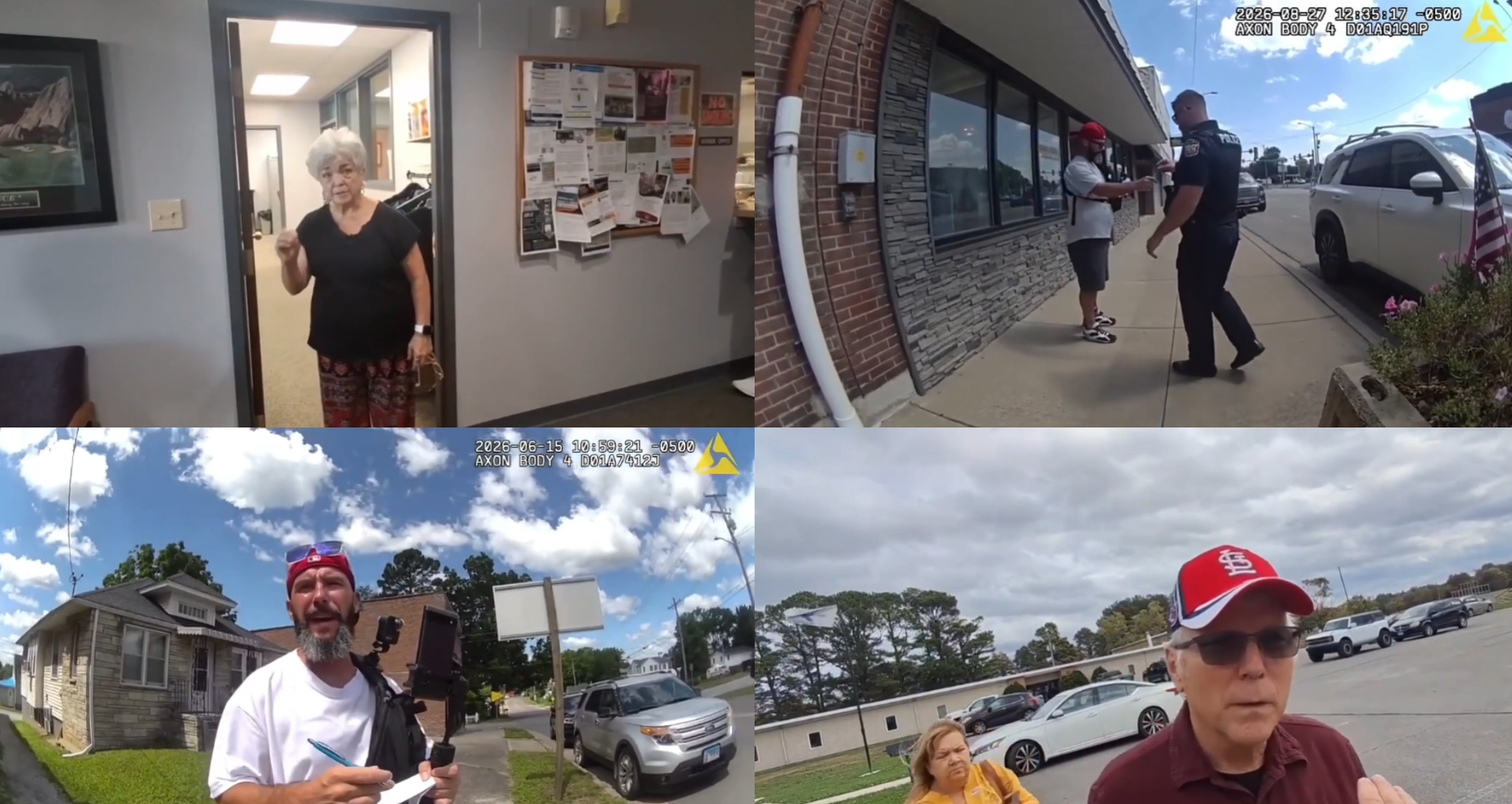
One September morning, Jeremy Bartlett walked into a public housing office in Marion, Illinois, wearing a GoPro and an electronic ankle monitor, and began filming the staff. Bartlett is a “First Amendment auditor,” one of a group of YouTubers who record in government offices, banks and other public places to test whether officials respect the right to film, often provoking confrontations that draw big audiences. Employees objected and police arrived but left without acting. The law is murky, since the Supreme Court has never directly ruled on a right to record in public. On Aug. 31, YouTube stopped paying many top auditing channels, saying they provoke and harass people. One prominent auditor blames federal pressure, which the Justice Department denies. Bartlett wears the monitor because a woman he filmed from a sidewalk accused him of stalking, a charge his attorney calls bogus.
Read the Story →

Support Lunch Break Reads

If you look forward to these four reads every day, consider joining the Lunch Club. It keeps LBR going.

Join the Lunch Club →

Other Stories Worth Reading

NPR
Project Gryffindor: Meta’s plan to get more school kids using Instagram
The Atlantic
How Jared Kushner Sparked a Revolution in the Balkans
The Guardian
The first truly weird Bond: 13 things to know about Robert Pattinson – from heavy saliva to dead clowns