This website uses cookies

Read our Privacy policy and Terms of use for more information.

LUNCH BREAK READS

Support Lunch Break Reads

If you look forward to these four reads every day, consider joining the Lunch Club. It keeps LBR going.

Join the Lunch Club →
01 • 16 Minute Read
The New York Times Eli Saslow
This Is What America’s Utility Bill Crisis Looks Like
Oklahoma utility bill crisis
Eli Saslow is always a great read, and his recent story about rising utility costs is no different. Last month, Genia Weitz, a disabled 58-year-old in McAlester, Oklahoma, found a disconnection notice for $1,340.96, more than her monthly income. State rules bar shut-offs when the heat index tops 101 degrees, and it had just dipped to 99. After the hottest U.S. summer on record, she and her husband had sealed themselves into one room with blankets to run the AC and her oxygen machine. Her daughter, who clawed out of addiction to an $80,000 job, borrows to pay her own bill. Her daughter-in-law, a nursing student with five children, buys power a few dollars at a time on a prepaid plan. The utility, which disconnects customers more often than any other investor-owned utility, blames heat and rising costs, including data centers. When the two women went from church to church asking for $20, every one had run out of money.
Unlocked for LBR Readers →
02 • 22 Minute Read
BBC Future Rachel Nuwer
The tragic tale of Mt Everest’s most famous dead body
Mount Everest
Just below Mount Everest’s summit on the north side, a dead climber in neon green boots lies curled under a rock overhang, and climbers step over his legs on their way up. Known as Green Boots, he was Tsewang Paljor, a 28-year-old from a farming village in India’s Ladakh region who joined the Indo-Tibetan Border Police, a high-altitude force, to support his family. In May 1996, he and two fellow Ladakhis pushed past their turnaround time and ignored their leader’s radio pleas in a bid to become the first Indians to summit from the north, then were caught in a deadly blizzard. Their leader says two Japanese climbers passed the dying men the next morning without helping. The Japanese team says no one warned them and that above 8,000 meters, each climber is responsible for himself. Paljor’s mother, who got about $3,690 in insurance, still believes he could have been saved.
Read the Story →
03 • 13 Minute Read
The Atlantic Robert F. Worth
How Castro’s Cuba Ends
Havana, Cuba
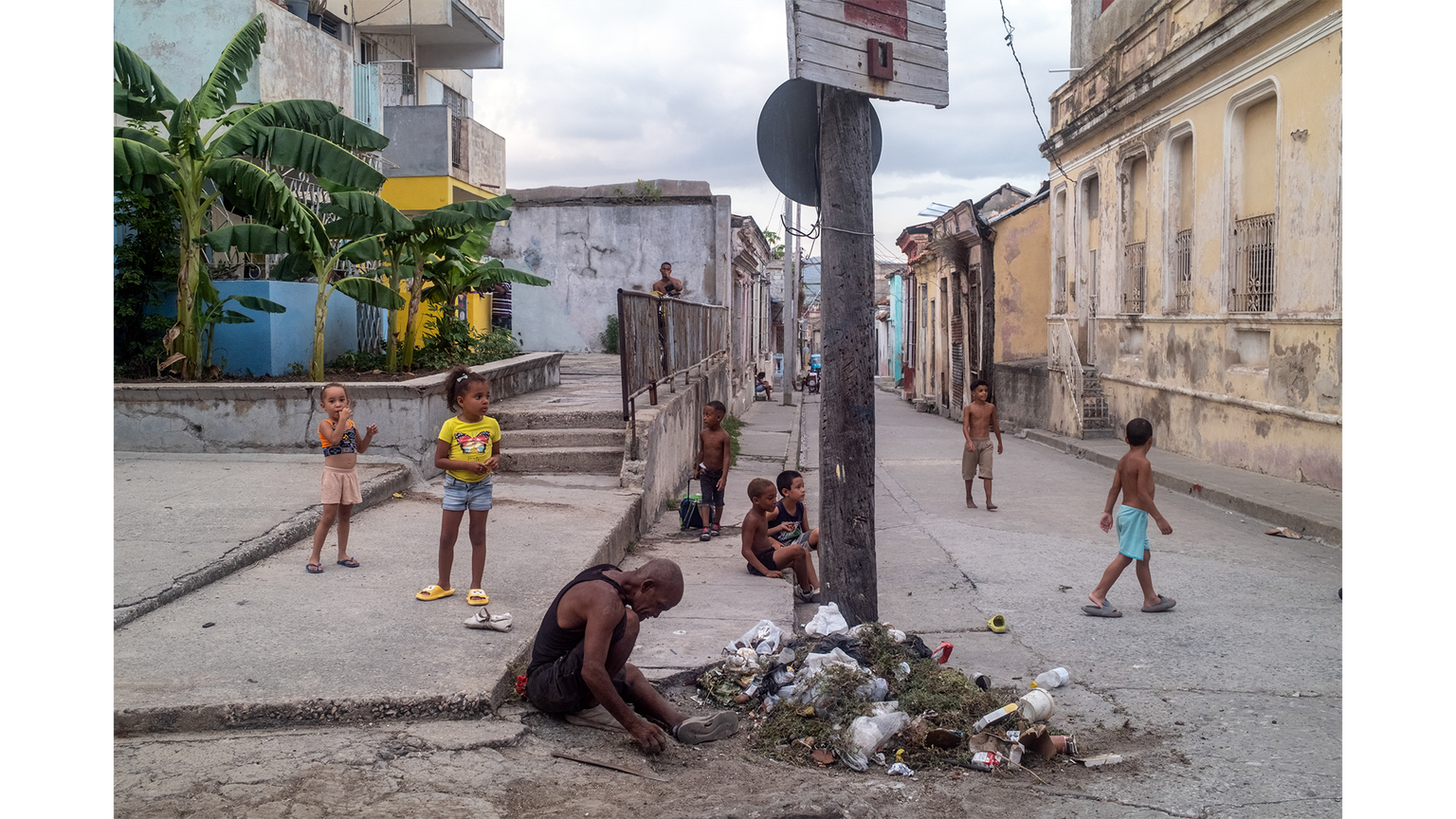
In a Havana church tower, a sketched map marks where Cuba’s Communist government once posted armed guards to watch worshippers. The guards are gone, and across the island the state itself is fading. By August, ration cards had been blank for weeks, police were scarce, and public salaries of about $10 a month couldn’t cover a carton of eggs. In eastern Cuba, one nurse treats an entire island after the government cut off its water, and up to a quarter of Cubans have emigrated in recent years. Churches, especially fast-growing Pentecostal congregations, now hand out the food and medicine the state no longer provides. Cubans openly curse the Castros, and many blame their own government rather than President Trump’s oil blockade. Yet the regime has crushed any organized opposition, and it staggers on, its ideology abandoned but its grip not yet broken.
Unlocked for LBR Readers →
04 • 28 Minute Read
Victory Journal Peter Macia
The Boys from Donetsk
FC Shakhtar Donetsk youth players
In spring 2015, outside Kiev, coaches barked “Da!” at teenage players from FC Shakhtar Donetsk, the soccer club that had dominated Eastern Europe until war drove it from home. After protests in Kiev forced out President Viktor Yanukovych in 2014, pro-Russian separatists seized Donetsk, and the club’s owner, billionaire Rinat Akhmetov, scattered his teams across the country. Weeks later, artillery from an unknown source set the club’s abandoned training center ablaze. The first team now plays home games in Lviv, 735 miles west, often before a few thousand fans, while the youth academy keeps boys on a path to pro careers instead of the army. With ticket revenue gone, the club survives on Akhmetov’s fortune and its exposure in European competition. That leaves open whether a club rooted in the Russian-leaning east, now playing in the country’s most European city, can help hold Ukraine together.
Read the Story →

Other Stories Worth Reading

NPR
Australian judge rejects prisoner’s human rights challenge to Vegemite ban
The Atlantic
Why So Many Men Aren’t Working
The New York Times
What Happened to the Neanderthals?