This website uses cookies

Read our Privacy policy and Terms of use for more information.

LUNCH BREAK READS

When do you usually read LBR?

Quick question. I send LBR at noon Eastern, which means some of you get it mid-morning and some of you get it after lunch is long over. I'd like to know when it actually works for you.

Login or Subscribe to participate

Support Lunch Break Reads

If you look forward to these four reads every day, consider joining the Lunch Club. It keeps LBR going.

Join the Lunch Club →
01 • 17 Minute Read
The Nation Emmet Fraizer
The Fall of Scientific American
Illustration for The Nation story on Scientific American
In March 2026, Scientific American’s editor in chief, David Ewalt, admitted to staff that editors had been told to keep “Trump” out of headlines because the magazine’s German owner, Springer Nature, feared the administration. Federal agencies had canceled the company’s journal subscriptions, and a Trump-appointed prosecutor had sent the magazine a threatening letter. Staffers say corporate lawyers then softened an op-ed calling that letter authoritarian, and after a column warned the US was heading toward dictatorship, the opinion section was paused for good. Citing editorial independence, staff voted to unionize. Three days before the ballots were counted, Springer Nature, which says it wanted to focus on academic publishing, sold the oldest magazine in the US to a little-known company called LabX, and much of the staff lost their jobs. The union won 31 to 1, but remaining staff fear a drift toward lightweight science stories.
Email Required: Read the Story →
02 • 11 Minute Read
The Atlantic Hillary Kelly
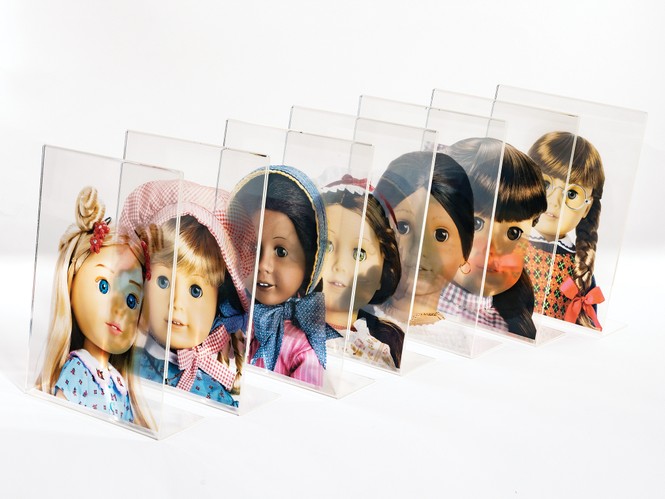
How American Girl Doll Lost Its Way
American Girl dolls for The Atlantic story
When American Girl launched in 1986, its $68 dolls came with historical novels about girls like Kirsten Larson, a Swedish immigrant in 1850s Minnesota whose best friend dies of cholera on the voyage over. Founder Pleasant Rowland, a former teacher, wanted to shield girlhood from a culture pushing kids to grow up fast. Hillary Kelly, who had a Kirsten doll as a girl, argues that after Rowland sold to Mattel in 1998, the company buried that heritage while chasing rivals like Bratz. It retired most original dolls, thinned the books, and filled catalogs with brand tie-ins. Revenue reportedly fell 61 percent from 2016 to late 2023. Mattel now courts nostalgic Millennial parents with a coffee-table history and a novel imagining original doll Samantha at 25, which Kelly finds tame. Yet when her daughters found a 1995 catalog, they were captivated by tiny period accessories the company no longer makes.
Unlocked for LBR Readers →
03 • 20 Minute Read
Longreads Aube Rey Lescure
Road Trip at the Borderland
Map of a fall foliage road trip route
At a Shanghai cancer clinic, when a doctor asked who the half-white woman beside him was, Aube Rey Lescure’s Chinese father said she was his niece. The two had been distant since her parents divorced and she moved to the US at 16, and he had told her about his colon cancer only after surgery. Weeks later, still bandaged and newly licensed, he drove her, her 81-year-old grandmother, and an uncle along the Yalu River, the border with North Korea, to see fall foliage he’d found on Douyin, China’s version of TikTok. He crept along at 30 miles per hour while his mother hoarded food and fought her seat belt. Navigating for him, Rey Lescure realized they were talking more than they had in decades. Back in Shanghai, at another appointment, he introduced her as his daughter.
Read the Story →
04 • 20 Minute Read
Aeon Zahaan Bharmal
The physics of getting fired
Detail of John Snow’s cholera map
In the summer of 2001, nine months into his first consulting job in London, Zahaan Bharmal was fired and sent down a single flight of stairs so no one would see him leave. He had worked flat out and earned praise, so the dismissal seemed to violate the cause and effect of physics, the subject that had steadied him as an anxious teenager and at Oxford. Now a Google executive, Bharmal argues that physics offers something deeper than the shortcut to certainty touted by figures like Elon Musk. The dot-com crash that cost him his job behaved like a chaotic system, where tiny changes cascade unpredictably, which taught him to build slack into his life rather than maximize effort. Physics, he concludes, is most useful not for answers but as a habit of questioning yourself and living with uncertainty.
Read the Story →

Other Stories Worth Reading

The Atlantic
Just Noting That Your Candy Corn Is Made of Bug Secretions
The New York Times
Patrick Stewart, Master of Shakespeare, ‘Star Trek’ and More, Has Died
NPR
Blockchain intelligence firms link North Korea to $6.3B hack on Binance