Layan Albaz, a 14-year-old from Gaza, lost both legs and several family members in an Israeli air strike that killed her sister, niece, and best friend. After months without proper medical care, she traveled alone to Chicago through the Palestine Children's Relief Fund and HEAL Palestine to receive prosthetics at Shriners Children's hospital. She was hosted by the Assaf family, whose patience helped her move from rage and grief toward trust, even as further family deaths reached her by phone mid-treatment. Rhana Natour follows her rehabilitation alongside the staggering scale of pediatric amputations in Gaza, and the uncertain question of what awaits her if she returns.
In 2005, ADX Florence—the ultra-secure federal prison holding the Unabomber and other high-profile inmates—recorded its first-ever homicide when Mexican Mafia associates Richard Santiago and Silvestre Rivera beat fellow gang member Manuel Torrez to death in a recreation yard, in full view of cameras. Rookie FBI agent Jon and prosecutor Bob Mydans spent years building a "green light" theory, suspecting the killing was a sanctioned gang hit tied to Torrez's past transgressions. But after Mydans died suddenly, prosecutors took a simpler approach at trial, where Rivera claimed self-defense. He was convicted; Santiago later pleaded guilty to avoid the death penalty.
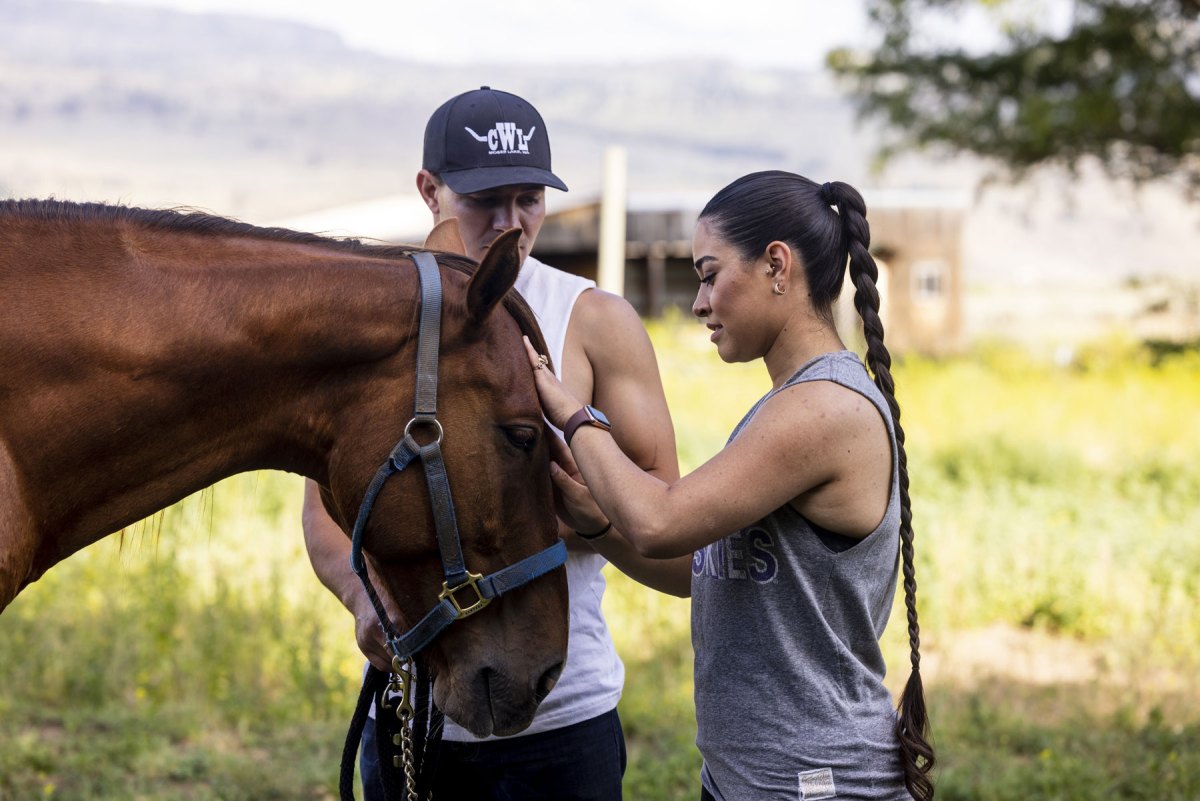
Andres Beckett, a Mexican-American construction worker from Omak, Washington, spent years fighting to break into the Suicide Race, a brutal horseback rodeo event dominated by Native riders and legacy families like the Marchand brothers. After a turbulent youth marked by drug dealing, family tragedy, and an identity crisis over his biological father, Andres found mentors in horse trainer Preston Boyd and the Marchands, who hazed him relentlessly before finally agreeing to train him. In 2021 he raced down Suicide Hill on his horse JD, but both were injured crashing into the river, forcing him to wait another year for a second shot.
Western monarch butterflies have collapsed to under 1% of their 1980s population, driven by habitat loss, pesticides, and climate change. The piece follows a "eggsplosion" in Brookings, Oregon, where volunteers hand-reared hundreds of monarchs—including one named Flamingo, tagged and later confirmed to have survived a 500-mile migration to Santa Cruz. Weaving together stories of citizen conservationists, a longtime butterfly researcher tracking pesticide-driven decline, and the annual Xerces Society count of overwintering monarchs, the author explores what it means to act meaningfully against a crisis too vast for any individual to solve, using the butterfly as a symbol for climate grief and small acts of hope.